Copox
Copper(I) oxide
CAS: 1317-39-1
Molecular Formula: Cu2O
Copox - Names and Identifiers
| Name | Copper(I) oxide |
| Synonyms | Copox Caocobre Brown copp oleonordox C.I. 77402 cobresandoz CopperIoxide Cuprous oxide dicopper oxide Copper(I) oxide Copper (I) oxide browncopperoxide Brown Copper Oxide Copperoxideminredpowder dicuprous oxygen(-2) anion |
| CAS | 1317-39-1 |
| EINECS | 215-270-7 |
| InChI | InChI=1/2Cu.O/q2*+1;-2 |
Copox - Physico-chemical Properties
| Molecular Formula | Cu2O |
| Molar Mass | 143.09 |
| Density | 6 g/mL at 25 °C (lit.) |
| Melting Point | 1232 °C |
| Boling Point | 1800 °C |
| Flash Point | 1800°C |
| Water Solubility | practically insoluble |
| Appearance | powder |
| Specific Gravity | 6. |
| Color | red |
| Exposure Limit | ACGIH: TWA 1 mg/m3NIOSH: IDLH 100 mg/m3; TWA 1 mg/m3 |
| Merck | 14,2664 |
| Storage Condition | Inert atmosphere,Room Temperature |
| Stability | Stable. May be air or light sensitive. |
| Sensitive | Air & Moisture Sensitive |
| Refractive Index | 2.705 |
| Physical and Chemical Properties | Properties red or dark red eight cubic crystalline powder. melting point 1235 ℃ relative density 6.0 solubility insoluble in water and alcohol, soluble in hydrochloric acid, ammonium chloride, ammonia, slightly soluble in nitric acid. It is dissolved in hydrochloric acid to produce white cuprous chloride crystal powder. Soluble in concentrated alkali, ferric chloride and other solutions. |
| Use | Used as ship bottom coating, pesticide fungicide, glaze, for cuprous oxide rectifier, photovoltaic, electroplating and the production of copper salts |
Copox - Risk and Safety
| Risk Codes | R22 - Harmful if swallowed R50/53 - Very toxic to aquatic organisms, may cause long-term adverse effects in the aquatic environment. R51/53 - Toxic to aquatic organisms, may cause long-term adverse effects in the aquatic environment. R11 - Highly Flammable |
| Safety Description | S22 - Do not breathe dust. S60 - This material and its container must be disposed of as hazardous waste. S61 - Avoid release to the environment. Refer to special instructions / safety data sheets. S16 - Keep away from sources of ignition. S7 - Keep container tightly closed. |
| UN IDs | UN 3077 9/PG 3 |
| WGK Germany | 3 |
| RTECS | GL8050000 |
| TSCA | Yes |
| HS Code | 28255000 |
| Hazard Class | 9 |
| Packing Group | III |
| Toxicity | LD50 orally in rats: 0.47 g/kg (Smyth) |
Copox - Upstream Downstream Industry
| Raw Materials | Copper |
Copox - Nature
Open Data Verified Data
red or dark red eight-sided cubic crystalline powder. The relative density is 6.0. Melting point 1235 °c. Oxygen was lost at 1800 °c. Insoluble in water and alcohol, soluble in hydrochloric acid, ammonium chloride, ammonia, slightly soluble in nitric acid. It is dissolved in hydrochloric acid to produce white cuprous chloride crystal powder. In case of dilute sulfuric acid
And dilute nitric acid to form copper salts. In the air will quickly turn blue. Soluble in concentrated alkali, ferric chloride and other solutions. It is gradually oxidized to black copper oxide in moist air. Highly toxic!
Last Update:2025-06-10 22:55:16
Copox - Preparation Method
Open Data Verified Data
- dry process: copper powder is mixed with copper oxide after removal of impurities, and is sent to a calciner and heated to 800 to 900 ° C. For calcination to form cuprous oxide. After removal, mechanical impurities were removed with a magnet, and then pulverized to 325 mesh to obtain a finished cuprous oxide product. If copper sulfate is used as the raw material, copper in copper sulfate is reduced with iron first, and the subsequent reaction steps are the same as the method using copper powder as the raw material.
- glucose reduction method: a copper sulfate solution is mixed with glucose and then reacted with a sodium hydroxide solution to produce cuprous oxide, which is filtered, rinsed, dried and pulverized to obtain a cuprous oxide product.
- electrolysis method: in an electrolytic cell with an iron shell lined with polyvinyl chloride, a cast copper plate is used as an anode, a copper plate is used as a cathode, potassium chromate is used as an additive, and a salt solution is used as an electrolyte, the content of sodium chloride is 290 ~ 310g/L, potassium chromate is 0.3~0. Under the conditions of 5g/L, temperature 70~90 ℃, pH 8~12, current density 1500A/m2, cuprous oxide is generated by precipitation separation, rinsing, filtering, cuprous oxide was obtained by drying.
Last Update:2022-01-01 11:05:45
Copox - Application
Open Data Verified Data
used in the manufacture of Ship Bottom antifouling paint (used to kill low-grade marine animals), pesticides, as well as various copper salts, Analytical reagents, red glass. It is also used for rectifier plating in the electrical industry. It is also used as a colorant for ceramics and enamels.
Last Update:2025-08-19 16:24:40
Copox - Safety
Open Data Verified Data
packed in an iron drum lined with a polyethylene plastic bag, 25kg or 50kg net per barrel. There should be a "highly toxic" sign. It is toxic. Risk CODE: refer to GB Class 6.1 61519. UN NO. 2765, 3010, 2766;IMDE CODE 6221, 3270, 6220, 6219 page, Class 6.1. Storage in a dry, well-ventilated warehouse, not mixed with oxidant. The container must be sealed to prevent contact with air to become copper oxide and reduce the use value. It is not allowed to be stored and mixed with strong acid, strong alkali and edible articles. When loading and unloading should be light to prevent packaging damage. Fire can be used with water, sand, all kinds of fire extinguishing. Toxicity and protection: This product dust in the air content of 0. 22~14mg/m3, work 1~2H will cause acute poisoning, manifested as Head Pain, weakness, pharyngeal and conjunctival redness, Nausea, muscle pain, sometimes Vomit and Diarrhea, fatigue, temperature increased. One day later, the body temperature can return to normal, but still weak, Head Pain, dizziness, pulse number accelerated, lymphocytes increased. Chronic poisoning is manifested by the fact that the local skin, hair and conjunctiva of workers exposed to copper compounds sometimes become light yellow-green or black-green, with dark red or magenta edges on the gums. It has a stimulating effect on the skin, dust irritates the eyes, and causes corneal ulcers. Acute poisoning with a certain concentration of K4[Fe(CN)6] solution for gastric lavage, take milk and other measures. The maximum allowable concentration in air is 0.1 mg/m3. Wear masks, dust-proof glasses, protective work clothes, and take a shower after work.
Last Update:2025-06-10 22:55:16
Copox - Reference Information
| NIST chemical information | information provided by: webbook.nist.gov (external link) |
| EPA chemical substance information | information provided by: ofmpeb.epa.gov (external link) |
| Introduction | cuprous oxide is a dark red cubic crystal or orange-yellow crystalline powder, toxic. Although it is stable in dry air, it is gradually oxidized to copper oxide in humid air. Insoluble in water and ethanol, soluble in dilute sulfuric acid disproportionation of copper sulfate and metal copper, soluble in nitric acid is oxidized to copper nitrate, it is dissolved in concentrated hydrochloric acid or ammonia water to form stable complex H3[CuCl4] or colorless ion [Cu(NH3)2], respectively. The latter is easily oxidized by air to a blue color of [Cu(NH3)4]2. |
| properties | cuprous oxide is a yellow or even red crystalline powder. The difference in color is caused by the size of the particles. The structure is a red copper type structure (cubic system) with a relative density of 6.04. The melting point was 1232 ° C. And the heat of formation was 166.67kJ/mol. Loss of oxygen at 1800 °c, insoluble in water and soluble in ammonia, and concentrated hydrochloric acid to produce white copper chloride crystal powder. cuprous oxide contains an excess of oxygen atoms, and holes appear in the crystal lattice of Cu, which plays a role of accepting electrons, and is a P-type semiconductor. The energy level is about 1.5eV, and the acceptor energy level is located at 0.3-0.5eV above the valence electron band. Furthermore, it is well known that the spectrum of the absorption excitation atom represents the configuration of the hydrogen atom. carbon dioxide is absorbed at room temperature, but is released when heated at 60-70 °c. Cuprous oxide can be obtained when copper oxide is reduced by hydrogen at about 150 ° C. If oxygen is present, the cuprous oxide can be returned to copper oxide by proper heating (200 ° C.), the trace amount of oxygen in the nitrogen gas can be removed, 2CuO H2 = Cu2O H2O 2Cu2O N2 = 4CuO N2. This product reacts with concentrated hydrochloric acid to generate white cuprous chloride crystalline powder. |
| preparation | an industrial method for preparing cuprous oxide is prepared by mixing and sealing calcination of precipitated copper powder and copper oxide. 1. Hydrazine reduction method: 3 to 5mL of a 20% aqueous hydrazine solution was poured into 50ml of a high-concentration aqueous copper acetate solution to reduce divalent copper ions. The solution initially turned green and produced nitrogen, which after a period of standing precipitated cuprous oxide in yellow to orange color. The precipitate was washed with water, ethanol and ether. Since an excessive amount of hydrazine can further reduce cuprous oxide to metallic copper, the amount of hydrazine used should not be excessive. 2. Glucose reduction synthesis of the film solution: 50g of copper sulfate pentahydrate and 75g of potassium sodium tartrate were respectively dissolved in 200ml of cold water, and the two were mixed when the solution was cooled to room temperature. Another 75g of sodium hydroxide was dissolved in 200ml of water to prepare an alkali solution. In the case where the mixed solution is stirred, the alkali solution is slowly added, and the temperature of the solution is carefully maintained so that the temperature of the solution does not rise and the solution becomes dark blue. This divalent copper salt solution was heated to boiling, and 10% glucose solution was added until the blue color disappeared to precipitate red cuprous oxide. Then it is put into 1L of cold water, and after standing for about 15min, the upper clear liquid is discarded; Water is added to stir, decanted, and filtered with a Buchner funnel; the precipitate was washed twice with 15ml of clear water, followed by three washes with ethanol and finally dried in an air bath. 3. Direct oxidation of metallic copper: copper is suspended in a vertical tubular electric furnace with platinum wire, and cuprous oxide is obtained by heating at 1000 ° C. For 24h in a nitrogen atmosphere containing 1%(volume fraction) of oxygen. Alternatively, the stoichiometric mixture of metallic copper and copper oxide is sealed in a vacuum tube and heated at 1000 ° C. For 5h to react to obtain cuprous oxide. |
| Use | cuprous oxide can be used as a colorant (red) in the manufacture of red glass, red enamel, ceramics, ship primer, crop fungicides, organic synthesis catalysts, rectifier materials and ship bottom coatings, etc., are also used in electroplating and organic synthesis catalysts. Cuprous oxide can be used as a reducing agent for the determination of nitrogen in azo compounds. used as ship bottom coating, pesticide bactericide, glaze medicine, used in cuprous oxide rectifier, photovoltaic cell, electroplating and production of copper salt, etc. used in the manufacture of Ship Bottom antifouling paint (used to kill low-grade marine animals), insecticide, as well as various copper salts, Analytical reagents, red glass. It is also used for rectifier plating in the electrical industry. It is also used as a colorant for ceramics and enamels. used as analytical reagent and bactericide when determining nitrogen in azo compounds, it is used as reducing agent, red glaze, electroplating, bactericide, red glass, Ship Bottom paint, plant seed sterilization and catalyst. |
| bactericide | cuprous oxide is a protective fungicide, which effectively inhibits the growth of mycelium, destroys its reproductive organs and prevents spreading. For seed treatment and foliar spraying. Seed dressing to control powdery mildew, leaf spot, Fusarium wilt, scab and rot disease, can be used for spinach, beet, tomato, pepper, pea, pumpkin, Bean and melon seed soaking, can also be sprayed, prevention and treatment of diseases of fruit trees. Can also be used for seed dressing, kill the slug and snail. |
| toxicity | when the dust content in the air reaches 0.22~14 mg/m3, work 1~2H will cause acute poisoning, manifested as Head Pain, weakness, pharyngeal and conjunctival redness, Nausea, muscle pain, sometimes Vomit and Diarrhea, fatigue, increased body temperature. One day later, the body temperature can return to normal, but still weak, Head Pain, dizziness, pulse number accelerated, lymphocytes increased. Chronic poisoning is manifested by the fact that the local skin, hair and conjunctiva of workers exposed to copper compounds sometimes become light yellow-green or black-green, with dark red or magenta edges on the gums. It has a stimulating effect on the skin, dust irritates the eyes, and causes corneal ulcers. Acute poisoning with a certain concentration of K4[Fe(CN)6] solution for gastric lavage, take milk and other measures. The maximum allowable concentration in air is 0.1 mg/m3. Wear masks, dust-proof glasses, protective work clothes, and take a shower after work. |
| production method | dry copper powder is mixed with copper oxide after removing impurities, it is sent to the calciner and heated to 800 to 900 ° C. For calcination to form cuprous oxide. After removal, mechanical impurities were removed with a magnet, and then pulverized to 325 mesh to obtain a finished cuprous oxide product. If copper sulfate is used as the raw material, copper in copper sulfate is reduced with iron first, and the subsequent reaction steps are the same as the method using copper powder as the raw material. In the Cu CuO → Cu2O glucose reduction method, a copper sulfate solution is mixed with glucose, and then a sodium hydroxide solution is added to react to generate cuprous oxide, which is filtered, rinsed, dried and pulverized to obtain a cuprous oxide product. CuSO4 2NaOH → Na2SO4 Cu(OH)2 ↓ 2Cu(OH)2 CH2OH(CHOH)4CHO → Cu2O ↓ 2H2O CH20H(CHOH)4COOH in an electrolytic cell made of iron shell lined with polyvinyl chloride, cast Copper Plate as anode, copper plate as cathode, with potassium chromate as additive, salt solution as electrolyte, which contains sodium chloride is 290~310g/L, potassium chromate is 0.3~0.5g/L, under the conditions of A temperature of 70 to 90 ° C., A pH of 8 to 12 and A current density of 1500 A/m2, electrolysis is carried out to form cuprous oxide, which is prepared by precipitation separation, rinsing, filtering and drying. Its cathode reaction: 2H 2e → H2O ↑ anode reaction: Cu -- 2e → Cu 2Cu 2C1-→ cu2c12 cu2c12 2NaOH → Cu2O ↓ H2O 2NaCl |
| category | pesticide |
| toxicity grade | high toxicity |
| Acute toxicity | oral-rat LD50 470 mg/kg; Intraperitoneal-mouse LD50: 380 mg/kg |
| flammability hazard characteristics | non-combustible; Fire hazard smoke |
| storage and transportation characteristics | The warehouse is low temperature, ventilated and dry, and stored separately from food raw materials |
| extinguishing agent | water, carbon dioxide, dry powder, sand |
| Occupational Standard | TWA 0.1 mg (copper)/m3; Tel 0.2 mg (copper)/M3 |
| toxic substance data | information provided by: pubchem.ncbi.nlm.nih.gov (external link) |
Last Update:2024-04-10 22:29:15

Supplier List

Featured ProductsSpot supply
Product Name: Copper(I) oxide Request for quotationCAS: 1317-39-1
Tel: +86-13776910623
Email: r@reformchem.com
Mobile: +86-13776910623
QQ: 3785839865
Wechat: chemical6666

Featured ProductsSpot supply
Product Name: Cu2O nanoparticles Visit Supplier Webpage Request for quotationCAS: 1317-39-1
Tel: +86-18821248368
Email: Int06@meryer.com
Mobile: +86-18821248368
QQ: 495145328
WhatsApp: +86-18821248368

Spot supply
Product Name: Copper oxide Visit Supplier Webpage Request for quotationCAS: 1317-39-1
Tel: 0510-83593312
Email: sales@honorshinechem.com
Mobile: 13665125081
QQ: 2404125167
Descriptions:
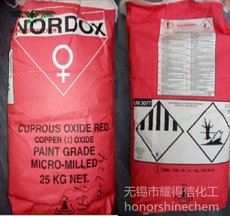
Product List: View Catalog

Spot supply
Product Name: Copper(I) oxide Request for quotationCAS: 1317-39-1
Tel: 0513-66814854
Email: pules.cn@gmail.com
Mobile: +86-17551318830

Spot supply
Product Name: Copper(I) oxide Request for quotationCAS: 1317-39-1
Tel: +86-17505207175
Email: 3787852685@qq.com
Mobile: +86-17505207175
QQ: 3787852685
Wechat: chemical6666

Product Name: Cuprous oxide Request for quotation
CAS: 1317-39-1
Tel: +86 19849939632
Email: 2470479589@qq.com
Mobile: +86 19849939632
QQ: 2470479589
CAS: 1317-39-1
Tel: +86 19849939632
Email: 2470479589@qq.com
Mobile: +86 19849939632
QQ: 2470479589

Spot supply
Product Name: Copper(I) oxide Request for quotationCAS: 1317-39-1
Tel: 400-968-2212
Email: 3623107365@qq.com
Mobile: 18916960931
QQ: 3623107365
Wechat: 18916960931

Spot supply
Product Name: Curpous oxide Visit Supplier Webpage Request for quotationCAS: 1317-39-1
Tel: +86-400-900-4166
Email: product@acmec-e.com
Mobile: +86-18621343501
QQ: 2881950922
Wechat: 18621343501
WhatsApp: +86-18621343501

Spot supply
Product Name: Cuprous oxide Visit Supplier Webpage Request for quotationCAS: 1317-39-1
Tel: +86 0571-86722205
Email: sales@chinaskyrun.com
Mobile: +8618958170122
QQ: 2531159185
Wechat: chinaskyrun

Product Name: Copper(I) oxide Request for quotation
CAS: 1317-39-1
Tel: 0086-551-65418684
Email: sales@tnjchem.com
info@tnjchem.com
Mobile: 0086 189 4982 3763
QQ: 2881500840
Wechat: 189 4982 3763
WhatsApp: 0086 189 4982 3763
Product List: View Catalog
CAS: 1317-39-1
Tel: 0086-551-65418684
Email: sales@tnjchem.com
info@tnjchem.com
Mobile: 0086 189 4982 3763
QQ: 2881500840
Wechat: 189 4982 3763
WhatsApp: 0086 189 4982 3763
Product List: View Catalog
Featured ProductsSpot supply
Product Name: Copper(I) oxide Request for quotationCAS: 1317-39-1
Tel: +86-13776910623
Email: r@reformchem.com
Mobile: +86-13776910623
QQ: 3785839865
Wechat: chemical6666
Featured ProductsSpot supply
Product Name: Cu2O nanoparticles Visit Supplier Webpage Request for quotationCAS: 1317-39-1
Tel: +86-18821248368
Email: Int06@meryer.com
Mobile: +86-18821248368
QQ: 495145328
WhatsApp: +86-18821248368
Spot supply
Product Name: Copper oxide Visit Supplier Webpage Request for quotationCAS: 1317-39-1
Tel: 0510-83593312
Email: sales@honorshinechem.com
Mobile: 13665125081
QQ: 2404125167
Descriptions:
Product List: View Catalog
Spot supply
Product Name: Copper(I) oxide Request for quotationCAS: 1317-39-1
Tel: 0513-66814854
Email: pules.cn@gmail.com
Mobile: +86-17551318830
Spot supply
Product Name: Copper(I) oxide Request for quotationCAS: 1317-39-1
Tel: +86-17505207175
Email: 3787852685@qq.com
Mobile: +86-17505207175
QQ: 3787852685
Wechat: chemical6666
Product Name: Cuprous oxide Request for quotation
CAS: 1317-39-1
Tel: +86 19849939632
Email: 2470479589@qq.com
Mobile: +86 19849939632
QQ: 2470479589
CAS: 1317-39-1
Tel: +86 19849939632
Email: 2470479589@qq.com
Mobile: +86 19849939632
QQ: 2470479589
Spot supply
Product Name: Copper(I) oxide Request for quotationCAS: 1317-39-1
Tel: 400-968-2212
Email: 3623107365@qq.com
Mobile: 18916960931
QQ: 3623107365
Wechat: 18916960931
Spot supply
Product Name: Curpous oxide Visit Supplier Webpage Request for quotationCAS: 1317-39-1
Tel: +86-400-900-4166
Email: product@acmec-e.com
Mobile: +86-18621343501
QQ: 2881950922
Wechat: 18621343501
WhatsApp: +86-18621343501
Spot supply
Product Name: Cuprous oxide Visit Supplier Webpage Request for quotationCAS: 1317-39-1
Tel: +86 0571-86722205
Email: sales@chinaskyrun.com
Mobile: +8618958170122
QQ: 2531159185
Wechat: chinaskyrun
Product Name: Copper(I) oxide Request for quotation
CAS: 1317-39-1
Tel: 0086-551-65418684
Email: sales@tnjchem.com
info@tnjchem.com
Mobile: 0086 189 4982 3763
QQ: 2881500840
Wechat: 189 4982 3763
WhatsApp: 0086 189 4982 3763
Product List: View Catalog
CAS: 1317-39-1
Tel: 0086-551-65418684
Email: sales@tnjchem.com
info@tnjchem.com
Mobile: 0086 189 4982 3763
QQ: 2881500840
Wechat: 189 4982 3763
WhatsApp: 0086 189 4982 3763
Product List: View Catalog
View History
Raw Materials for Copox